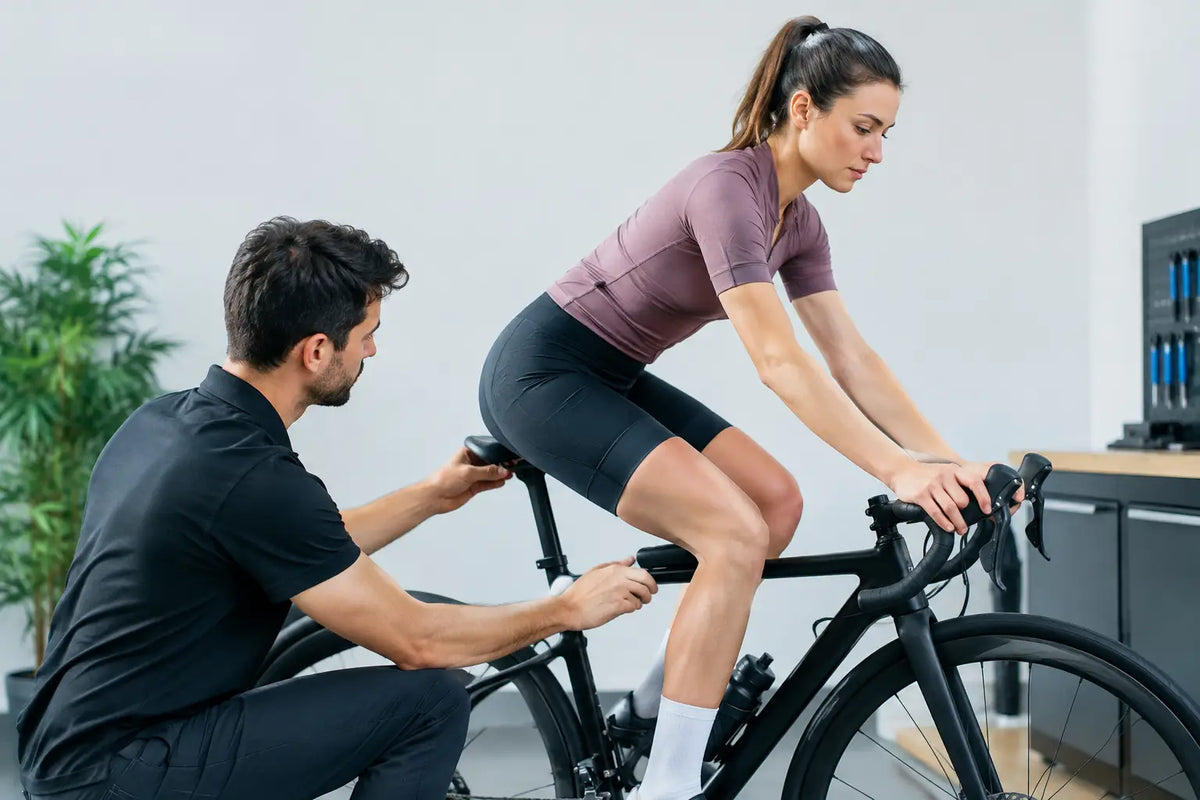
Numbness in your hands after 40 kilometres, knee pain on a climb, or the feeling that you can never find a stable position are not details you have to accept. A bike fit for cyclists analyses the relationship between your body, your bike, and your goals, so you can ride with more comfort, control, and efficiency.
It is not about copying the position of a professional athlete or lowering the handlebars to the limit. The best position is one that respects your mobility, injury history, experience, bike type, and the time you spend riding. For weekend riders, those preparing for a gran fondo, or triathletes, the starting point is always the same: understanding how you move and what you need from your bike.
What is a bike fit for cyclists?
A bike fit is an individual assessment of your position on the bike. During the session, a professional observes how you ride, takes relevant measurements, and adjusts components such as saddle height and setback, cleat position, handlebar reach, and the setup of the aero bars, where applicable.
The goal is not to find a rigid or definitive position. The body adapts to training, strength, and mobility, and the bike may need to follow that evolution. What we are looking for is a functional position: a setup that allows you to produce power, breathe well, control the bike, and recover without unnecessary strain.
There is also an important difference between a quick adjustment and a full bike fit. Raising or lowering the saddle by a few millimetres can relieve a specific discomfort. But if the root of the problem lies in the cleats, handlebar width, hip mobility, or an excessively high training load, that isolated adjustment may not solve anything or may even create another compensation.
When does it make sense to get a bike fit?
You do not need to be a competitive cyclist to benefit from an assessment. It makes sense to book a bike fit when you buy a new bike, change disciplines, start using clipless pedals, or significantly increase your training volume and intensity.
It is also a sensible decision if you have recurring pain during or after training. The knees, lower back, neck, shoulders, hands, and feet are areas that often reveal positioning problems, although the position on the bike is not the only possible explanation. A previous injury, lack of strength, accumulated fatigue, or unsuitable footwear also count.
There are simple signs to watch out for:
- You constantly shift around on the saddle to find support.
- You experience numbness in your fingers, feet, or perineal area.
- You always feel pain on the same side of your body.
- You lose control or confidence on descents and corners.
- You have difficulty maintaining the position intended for your type of race.
What happens during a bike fit assessment?
A well-done assessment begins before you even get on the bike. The professional should understand what bike you use, what distances you ride, whether you have competition goals, what injuries you have had, and where you feel discomfort. It is not the same to set up a road bike for two-hour rides, a triathlon bike for a long race, or a mountain bike for technical trails.
Next comes the body analysis. Joint mobility, stability, relevant asymmetries, and range of motion help define a position that is demanding without being unrealistic. An aerodynamic position can be useful, but it loses its value if it forces you to lift your head, hold your breath, or get off the aero bars after a few minutes.
On the bike, adjustments follow a logic. Usually, it starts with the foot-pedal interface, because the cleats influence the knee path and the distribution of pressure on the foot. Next is the saddle: height, setback, tilt, width, and shape. Only then is the cockpit assessed, including stem length, handlebars, brake levers, and, if applicable, aero extensions.
The result should not just be a list of numbers. You should leave understanding what was changed, why it was changed, and how to test the new position in your upcoming training. Some adjustments are felt immediately; others require several days of adaptation, especially when the previous position was very different.
Comfort and performance are not opposites
It is common to think that a comfortable position is not very competitive. In practice, discomfort limits performance. If you have to change position all the time, if you stop applying power because of knee pain, or if you cannot keep your arms relaxed, you are wasting energy.
Even so, comfort does not mean a passive position. A cyclist who wants to compete may accept a more demanding position than someone who goes for leisurely rides, provided they have the physical capacity to sustain it and the risk-benefit ratio makes sense. This is where personalization makes a difference.
Adjusting the bike does not replace training the body
A bike fit is one piece of the puzzle, not a magic solution. A good position can reduce pressure points and improve efficiency of movement, but it does not replace strength, mobility, technique, rest, or proper nutrition.
Imagine that your handlebars are high because you have limited thoracic mobility or low tolerance for supporting your torso for two hours. Lowering them without preparation can create tension in your neck and lower back. Keeping them too high forever can limit the position you want to achieve. The answer may involve a progressive adjustment of the bike and strength and mobility work off the bike.
The same happens with knee pain. The position of the cleats and saddle deserves attention, but the weekly load, cadence, recovery, and the strength of the hip muscles should also be assessed. Looking for a single cause for all problems is tempting, but it rarely reflects reality.
At ESPECTRO Performance, a bike fit can be integrated with physical assessment, strength training, and endurance planning. This approach allows the bike and your training to work in the same direction, instead of functioning as separate decisions.
How to make the most of the adjustments after the session
After a bike fit, avoid debuting the new position at the most important event of the season. Do several progressive rides and record what you feel: when the discomfort appears, where, with what intensity, and on what type of terrain. This information is much more useful than simply saying the position “feels strange.”
Also confirm that the bike remains as it was adjusted. A sliding saddle, worn cleats, or carelessly tightened bolts can alter the position. If you use more than one bike, do not assume that the measurements transfer directly. Geometries, cranksets, shoes, and contact points vary.
Finally, allow time for adaptation without normalizing pain. A change can alter muscle activation and require a few training sessions before it feels natural. Sharp pain, persistent tingling, or a clear worsening of symptoms justify a new assessment and, when necessary, clinical follow-up.
Frequently asked questions about bike fit
How long does it take to adapt to a new position?
It depends on the extent of the changes and your experience. Small adjustments may feel natural from the very first ride. Changes to the saddle, cleats, or aerodynamic position may require several weeks of progressive exposure.
Can I get a bike fit if I am a beginner?
Yes. In fact, starting with a proper position helps you build good habits and enjoy your first rides more. You do not need a high training volume or competitive equipment to deserve professional guidance.
Should I get a bike fit before buying a bike?
If you are unsure between sizes or are looking for a bike for a specific goal, a pre-purchase assessment can prevent a difficult-to-correct choice later. Even so, adjustments are possible on a bike you have already purchased, provided the geometry and size are suitable.
The bike should adapt to your body and your sports project, not force you to suffer to fit into a position you saw in a photograph. Ride, watch for signs, and seek guidance before turning recurring discomfort into a greater limitation.


